Lifestyle
Things to Do in Chopta Besides the Tungnath Trek
Lake Haven Resort19 min read
Ask most people why they are going to Chopta, and the answer is almost always the same: the Tungnath Chandrashila Trek. And why not?
Things to Do in Chopta Besides the Tungnath Trek — 10 Incredible Experiences You Cannot Miss
.
Ask most people why they are going to Chopta, and the answer is almost always the same: the Tungnath Chandrashila Trek. And why not? Trekking to the highest Shiva temple in the world and pushing on to the Chandrashila summit at 4,130 metres for a 360-degree panorama of the Garhwal Himalayas is one of the finest trekking experiences in all of India. It deserves every bit of its legendary reputation.
But here is something that genuinely surprises most first-time visitors to this extraordinary region: Chopta is so much more than the Tungnath trek. If all you do in Chopta is that single trail, you are leaving the best parts of your holiday completely untouched. The Chopta region — nestled within the Kedarnath Wildlife Sanctuary in the Rudraprayag district of Uttarakhand — is one of the richest, most diverse, and most rewarding Himalayan travel destinations in all of northern India.
There are alpine meadows that stretch to the horizon under open skies, a high-altitude mirror lake that has stolen the breath of every photographer who has stood beside it, a wildlife sanctuary for one of the rarest animals in the Himalayan world, birdwatching trails that draw ornithologists from across Asia, ancient temples that predate written records, a sky full of stars untouched by light pollution, pilgrimage routes of profound spiritual significance, and a quality of silence and natural beauty that has almost vanished from modern life.
This guide covers 10 incredible things to do in Chopta, Uttarakhand — beyond the famous Tungnath trek — that will transform your trip from a single-trek visit into a truly complete and unforgettable Himalayan experience. Every one of these activities is easily accessible from a single comfortable base: Lake Haven Resort, Sari, Chopta.
.
.
1. Deoria Tal Sunrise Trek — The Most Magical Morning in the Himalayas
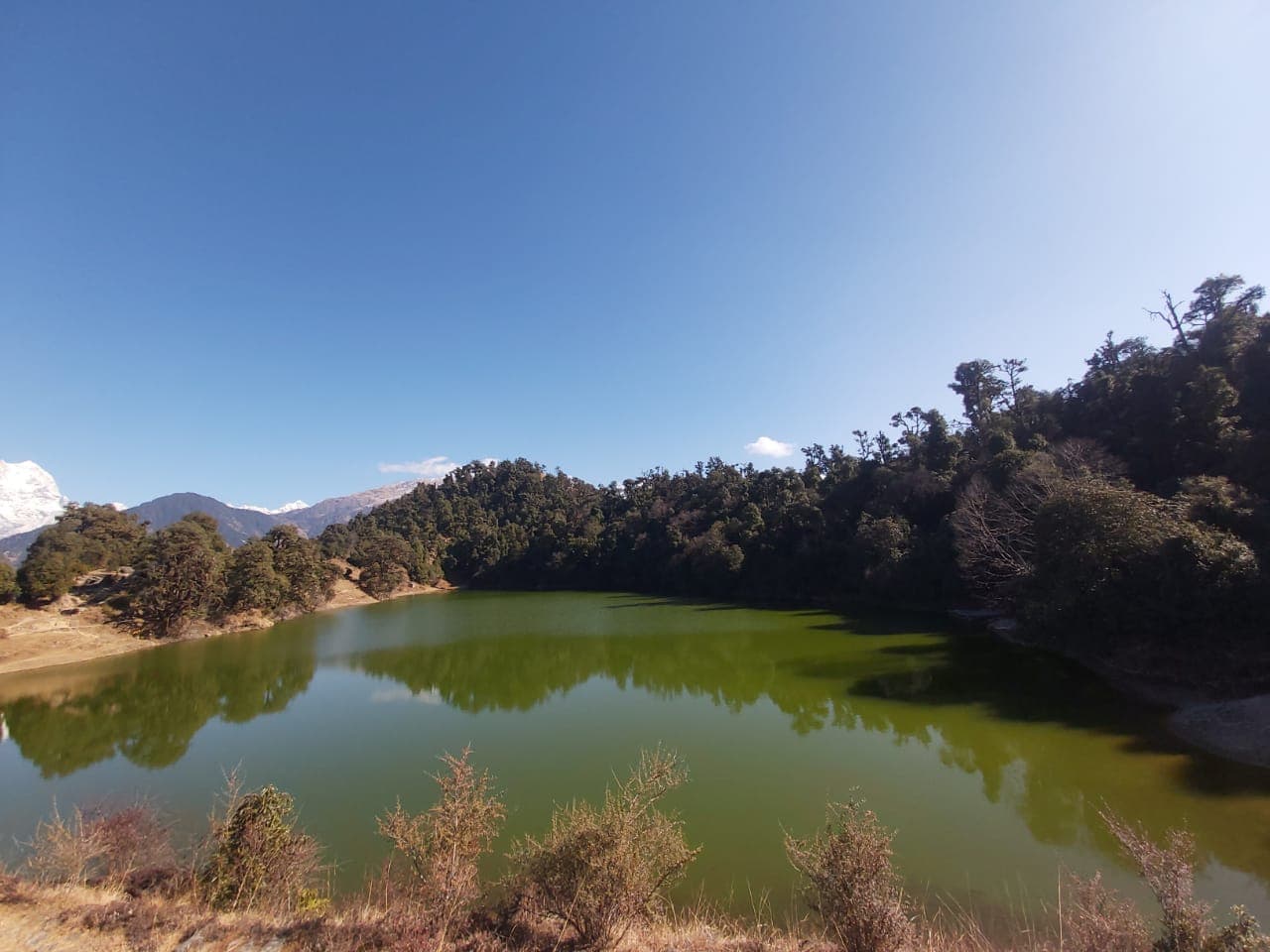
If the Tungnath Chandrashila Trek is the most iconic experience near Chopta, the Deoria Tal sunrise trek is the most breathtaking. Deoria Tal is a pristine, sacred high-altitude lake perched at 2,438 metres (7,999 feet) above sea level, nestled in the dense oak and rhododendron forests above Sari village. It is approximately 3 kilometres from the Sari village trailhead — a 1.5 to 2 hour gentle uphill walk — and what awaits you at the top is one of the most photographed and most deeply moving natural scenes in the entire Indian Himalaya.
The lake is world-famous for its perfect reflection of the Chaukhamba massif — a group of four enormous peaks in the Gangotri range, rising between 6,854 metres and 7,138 metres above sea level. On a clear morning, as the first golden light of sunrise touches these peaks, they appear twice — blazing above the horizon and shimmering perfectly below in the still, glassy surface of the lake. The silence, the cold mountain air, the impossibility of the beauty you are witnessing — it is the kind of moment that travellers carry with them for the rest of their lives.
The ideal strategy is to wake at 4:30 AM at Lake Haven Resort in Sari, begin the trek by torchlight, and reach Deoria Tal just as the sky begins to lighten in the east. The trail passes through a beautiful, atmospheric forest that is alive with birdsong even before dawn. The lake is also steeped in mythology — according to local legend and references in the Mahabharata, the Pandavas rested here during their exile, and Yaksha, the celestial guardian of nature, is said to have asked the Pandavas his famous riddles at this very spot.
Distance: 3 km one way from Sari village trailhead
Altitude: Sari (1,900 m) to Deoria Tal (2,438 m) — gain of 538 metres
Difficulty: Easy to Moderate — suitable for beginners and families
Best Time: April to June and September to November | Tip: Start before 5 AM for sunrise
.
.
2. Rohini Bugyal — The Secret Alpine Meadow Most Tourists Miss
.
One of the best kept secrets of the Chopta region, Rohini Bugyal is a vast, lush alpine meadow (bugyal) that lies approximately 4 kilometres from Chopta at an altitude of around 2,500 metres. While the Tungnath trail draws crowds in peak season, Rohini Bugyal remains wonderfully quiet — most visitors to Chopta never even know it exists. This is a place for those who want the raw, undisturbed majesty of the Garhwal Himalayas without the company of other tourists.
The trek to Rohini Bugyal from Chopta takes approximately 6 to 7 hours return, passing through magnificent dense forests of oak, rhododendron, and deodar before opening out into the sweeping, flower-carpeted expanse of the bugyal itself. In spring, the meadow is a riot of colour — Himalayan wildflowers bloom in every direction, the sky is a deep, impossible blue, and the views of snow-capped peaks including Nanda Devi, Trishul, Kedarnath, Nilkantha, and Chaukhamba are panoramic and unobstructed.
Rohini Bugyal is also an excellent camping destination for experienced trekkers who want to spend a night under the open Himalayan sky in genuine wilderness. The meadow is rich in bird species — this is excellent Monal pheasant country — and the forest on the approach trail offers some of the best birdwatching in the entire Chopta region. If you have a spare day and want to experience Chopta at its most pristine and undiscovered, the Rohini Bugyal trek is the answer.
Distance: Approx. 4 km one way from Chopta
Difficulty: Moderate — suitable for reasonably fit trekkers
Best Time: May to June (wildflowers) and September to October (clear views)
.
.
3. Birdwatching in the Kedarnath Wildlife Sanctuary — A Paradise for Bird Lovers
Chopta and the surrounding Kedarnath Wildlife Sanctuary are among the finest birdwatching destinations in all of north India — a fact that is still not widely known outside the ornithology community, which keeps the trails refreshingly uncrowded for those who know where to look. The sanctuary's dense forests, diverse altitudinal range, and status as a protected ecosystem create the perfect habitat for an extraordinary range of Himalayan bird species, many of which are rare or endangered.
The undisputed star of Chopta birdwatching is the Himalayan Monal (Lophophorus impejanus) — Uttarakhand's state bird and one of the most spectacularly beautiful birds found anywhere on earth. The male Monal is an iridescent jewel: metallic green, copper, and purple plumage that catches the light like a living gemstone. Seeing a Monal pheasant in the wild, in the forests above Chopta or on the Tungnath trail, is a moment that dedicated birders travel thousands of kilometres for.
Beyond the Monal, the forests around Chopta host the koklass pheasant, cheer pheasant, khalij pheasant, several species of laughingthrush, Himalayan woodpeckers, various nuthatches, redstarts, forktails, minivets, and during migration season, a remarkable diversity of warblers and flycatchers. The Kakdagaad Birding Trail and the forest sections of the Deoria Tal route are particularly productive, and early morning — before 8 AM — is invariably the best time for sightings.
Larger wildlife including Himalayan black bear, musk deer, barking deer (Muntjac), serow, and occasionally leopard also inhabit the sanctuary. Wildlife sightings are most likely at dawn and dusk along the quieter forest trails.
Best Locations: Kakdagaad Trail, Deoria Tal forest section, Rohini Bugyal approach, Chopta meadow edges
Best Time: April to June (breeding season, best sightings) and September to November
What to Carry: Binoculars, a field guide to Himalayan birds, camera with zoom lens, quiet clothing in earth tones.
.
.
4. Visit the Kanchula Korak Musk Deer Sanctuary — Meet One of the Rarest Animals in the Himalayas
Located just 7 kilometres from Chopta on the Chopta-Gopeshwar road, the Kanchula Korak Musk Deer Sanctuary is one of the most fascinating and least-visited attractions in the entire Chopta region — and a must-do for anyone with even a passing interest in wildlife and conservation. Spread over 5 square kilometres of dense Himalayan forest, this sanctuary is a dedicated conservation and breeding centre for the Himalayan Musk Deer (Moschus leucogaster) — one of the most endangered and most fascinating animals in the mountain ecosystem.
The Himalayan Musk Deer, known in Hindi as Kasturi Mriga (the fragrant deer), is a small, secretive ungulate found only at high altitudes in the Himalayas and surrounding mountain ranges. The male produces musk — one of the most valuable and aromatic natural substances in the world, historically used in perfumery and Ayurvedic medicine — from a gland near its abdomen. This musk has made the deer a target of intensive poaching for centuries, driving it to endangered status across much of its range. The Kanchula Korak sanctuary plays a vital role in breeding and protecting these remarkable animals.
A visit to the sanctuary is a peaceful, educational, and genuinely moving experience. You can walk through the forested grounds, observe the resident musk deer at close range in their semi-wild enclosures, and learn about the conservation challenges facing this species. The sanctuary grounds are also excellent for birdwatching, with colourful Himalayan birds frequently spotted in the surrounding forest. Entry is free, making this one of the best-value experiences in the entire Chopta region.
Location: 7 km from Chopta on Chopta-Gopeshwar Road
Timings: 6:00 AM to 6:00 PM
Entry Fee: Free
Best For: Families, wildlife lovers, photographers, and curious travellers of all ages
.
.
5. Stargazing Under the Himalayan Sky — One of India's Finest Dark Skies
In an age of pervasive light pollution, genuinely dark skies have become one of the rarest and most precious natural experiences available to travellers. The Chopta region — remote, elevated at 2,680 metres, far from any major urban centre, and protected from development by its status within a wildlife sanctuary — offers some of the darkest and clearest night skies in all of northern India. On a cloudless, moonless night in Chopta, the Milky Way is not a faint smudge on the horizon. It is a blazing river of light that stretches from one mountain ridge to the other, close enough to feel as though you could reach up and touch it.
The best stargazing in the Chopta region requires nothing more than stepping outside your accommodation after 9 PM on a clear night. On such nights, thousands of stars are visible to the naked eye — far more than most city dwellers have ever seen in their lives. Constellations that are mere outlines in urban skies become brilliant, three-dimensional structures. Shooting stars are common. Planets glow steadily against the stellar field. And around 2 AM, when the Milky Way rises to its highest point, the spectacle becomes almost overwhelming in its scale and beauty.
Astrophotographers in particular are drawn to the Chopta region for its combination of altitude (reducing atmospheric haze), clean dry air, and minimal light pollution. Long-exposure images from Chopta and Deoria Tal — the lake's reflection adding an extra dimension — have won awards in international astrophotography competitions. Even without a camera, simply lying on your back in the Chopta meadow on a clear night and looking up at the sky is an experience of genuine, perspective-shifting wonder.
Best Season: October to November and March to May — clearest skies with minimal monsoon cloud
Best Locations: Chopta meadow, Deoria Tal shore, Rohini Bugyal
Tip: Check the lunar calendar — new moon nights offer the darkest skies and best Milky Way visibility
.
.
6. Explore Ukhimath — The Ancient Winter Home of the Kedarnath Deity
Approximately 45 kilometres from Chopta, the town of Ukhimath is one of the most spiritually significant and historically rich places in the entire Rudraprayag district — and yet it is visited by only a small fraction of the travellers who pass through the region on their way to Chopta or Kedarnath. This is a genuine missed opportunity, because Ukhimath offers a depth of religious history, temple architecture, and cultural authenticity that is rare even by Uttarakhand's extraordinary standards.
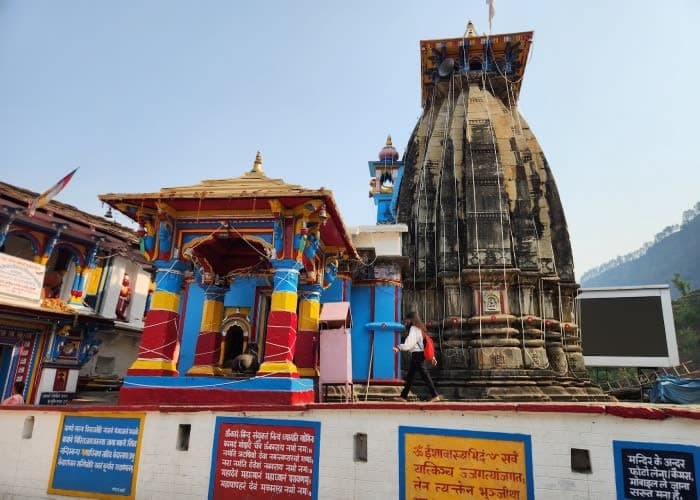
The most important fact about Ukhimath is this: it is the winter abode of Lord Kedarnath. Every year in October or November, when the Kedarnath temple closes for winter due to heavy snow, the sacred idol of Kedarnath Ji is ceremonially brought down from the high Himalayan temple and installed at the Omkareshwar temple in Ukhimath, where it remains for six months until Kedarnath reopens in May. During this period, devotees who cannot make the high-altitude journey to Kedarnath come to Ukhimath to seek the deity's blessings.
The Omkareshwar temple complex in Ukhimath also houses the winter idols of Tungnath, Kalpeshwar, and Madhyamaheshwar — making it a remarkable concentration of sacred Panch Kedar presences in a single temple complex. The town itself is ancient, traditionally Garhwali in character, and filled with the energy of pilgrimage and devotion. A visit to Ukhimath offers a unique window into the living religious traditions of the Garhwal Himalayas — traditions that have continued unbroken for over a thousand years.
Distance from Chopta: Approximately 45 km
What to See: Omkareshwar Temple, winter idols of Panch Kedar deities, traditional Garhwali town
Best Time to Visit: October to April — when the winter idols are present at Omkareshwar
.
.
7. Photography in Chopta — One of the Most Photogenic Landscapes in India
Even if you have never considered yourself a photographer, the Chopta region will turn you into one. This is, without question, one of the most photogenic landscapes in the entire Indian Himalaya — a fact that professional photographers, travel journalists, and social media explorers have been quietly discovering for years. Every trail, every meadow, every lake, and every weather condition in Chopta seems designed to produce extraordinary images.
The iconic Deoria Tal reflection of the Chaukhamba peaks at sunrise is perhaps the most celebrated shot — a classic of Himalayan photography that appears in magazines, tourism brochures, and award-winning photo collections. But the region's photographic opportunities extend far beyond this single famous scene. The rhododendron forests in full spring bloom create cathedral-like tunnels of red and pink flowers. The Chopta meadows at golden hour, with the snow peaks glowing above the treeline, are extraordinary. The Monal pheasant, with its iridescent plumage, is one of the most coveted bird photography subjects in Asia.
The Chandrashila summit at sunrise offers a panoramic mountain photography opportunity that rivals anything available in the Alps or Andes. Winter snowfall transforms the entire landscape into a monochromatic masterpiece of white peaks and dark forest that is deeply striking in photographs. And the night sky above Chopta, as discussed earlier, offers astrophotography opportunities that experienced photographers travel specifically to capture.
Best Photography Spots: Deoria Tal (sunrise reflection), Chopta meadow (golden hour), Chandrashila summit (panoramic peaks), Rohini Bugyal (wildflowers), Kanchula Korak (wildlife)
Best Season for Photography: April-May (rhododendrons and clear skies) and October-November (post-monsoon clarity)
.
.
8. Explore the Panch Kedar Pilgrimage Circuit — Chopta as the Spiritual Centre
Chopta sits at the spiritual heart of one of Hinduism's most sacred pilgrimage circuits — the Panch Kedar, or Five Shrines of Lord Shiva. According to legend rooted in the Mahabharata, after the great Kurukshetra war, the Pandavas sought Lord Shiva's forgiveness. Shiva, reluctant to grant his blessing to those who had caused such destruction, took the form of a bull and hid underground at Guptkashi. When the Pandavas caught up with him, the bull's body appeared at five different locations across the Garhwal Himalayas — and at each of these five locations, the Pandavas built a temple to honour the divine presence.
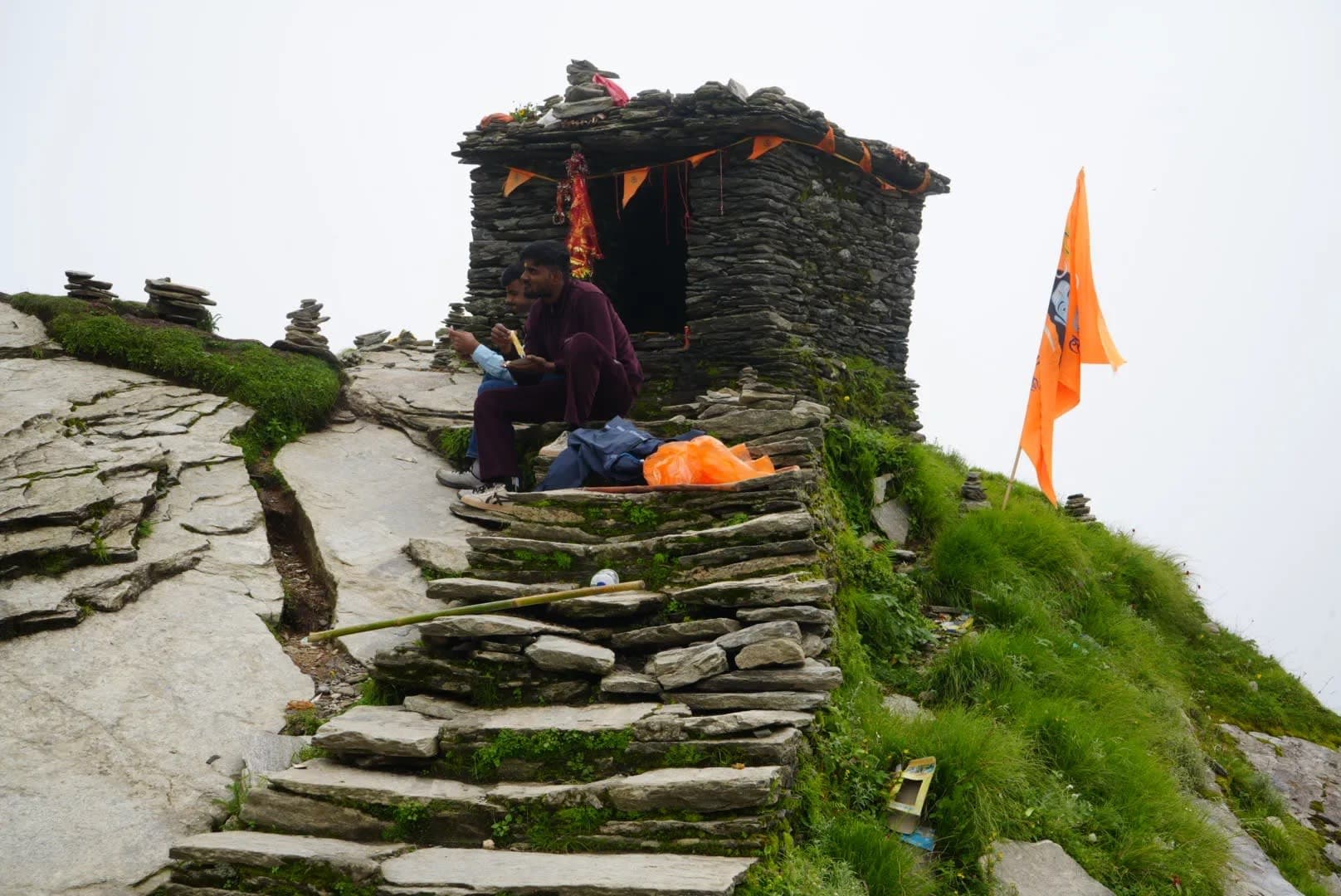
Tungnath (3,680 m) — the arms (bahu) of Lord Shiva — is one of these five sacred shrines, and it sits right above Chopta. But what is less widely known is that Chopta is described as the epicentre of all five Panch Kedar shrines — with Kedarnath and Madhyamaheshwar to the left and Rudranath and Kalpeshwar to the right. From Chopta, all five Panch Kedar shrines are accessible within a day's travel, making the region a uniquely powerful base for Panch Kedar pilgrimage.
The Madhyamaheshwar temple (3,497 m) is one of the most beautiful and least crowded of the five shrines — a two-day trek through some of the most spectacular scenery in Uttarakhand, through high meadows with extraordinary views of Kedarnath and Neelkanth peaks. Even if you are not a religious pilgrim, the combination of natural beauty and ancient sacred atmosphere on these trails is profoundly moving. Many travellers who come to Chopta purely for trekking find themselves unexpectedly touched by the depth and continuity of Himalayan spiritual tradition they encounter here.
Panch Kedar from Chopta: Tungnath (5 km trek) | Madhyamaheshwar (2-day trek) | Rudranath (accessible via Gopeshwar) | Kalpeshwar | Kedarnath
Recommended for: Pilgrims, spiritual seekers, trekkers interested in mythology and sacred landscapes
.
.
9. Snow Activities in Winter Chopta — A Himalayan Winter Wonderland
While Chopta is famous primarily as a spring and autumn trekking destination, the winter months of December through February transform the region into something entirely different — and for a specific type of traveller, equally or even more extraordinary. When the first heavy snowfall arrives in late November or December, Chopta disappears under a thick blanket of white that covers the meadows, loads the branches of the rhododendrons and oaks, and turns the entire landscape into a silent, monochromatic masterpiece.
The Tungnath temple closes in November (the deity moves to Ukhimath for winter), but the trail toward Tungnath becomes a spectacular snow trekking route for adventurous visitors. Trekkers with proper winter gear — gaiters, insulated boots, warm layers, and trekking poles — trek through knee-deep snow to enjoy views and experiences that are simply unavailable in any other season. The Chopta meadows under snow, with the white Himalayan peaks above, the dark pine forest surrounding, and the absolute silence of a snow-covered mountain landscape, are among the most beautiful winter scenes available anywhere in India.
Photography enthusiasts in particular are drawn to winter Chopta for the dramatic contrasts — deep blue sky against white snow, the red of rhododendron berries against frost, the golden light of a winter sunset over the snow peaks. Snow activities including snowshoeing, short snow treks, and winter nature walks are popular with visitors who come prepared with appropriate gear. Families with children specifically seek out winter Chopta for the reliable snowfall and the joy of playing in pristine mountain snow.
Best Months for Snow: December to February — peak snowfall
Important: Road conditions can be challenging in heavy snowfall. Always check road status and come equipped for cold (-5°C to -15°C at night)
.
.
10. Slow Travel in Sari Village — Experience Authentic Garhwali Mountain Life
In a world where travel has increasingly become about ticking boxes and producing Instagram content, Sari village — the small Garhwali hamlet at the base of Deoria Tal and gateway to the Chopta region — offers something increasingly precious and increasingly rare: the experience of simply being somewhere beautiful, peaceful, and deeply authentic, without an agenda or a schedule.
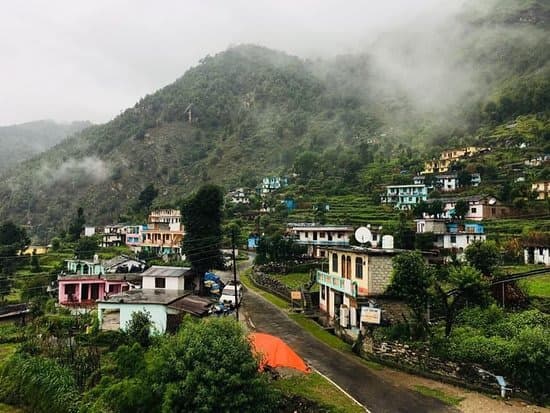
Sari is a living, breathing example of traditional Garhwali mountain culture — a culture that has remained relatively unchanged in its fundamentals for centuries, shaped by the rhythms of the seasons, the demands of the high-altitude environment, and the deep spiritual traditions of the Himalayan region. The stone-paved lanes between traditional wooden houses, the sound of temple bells at dawn and dusk, the warmth of the local people who have lived their entire lives within sight of the same great peaks — these are things that cannot be rushed, packaged, or experienced from inside a speeding vehicle.
Take a morning to walk through Sari village without any particular destination. Sit with the local shopkeeper over a cup of chai. Watch the elder villagers perform their morning puja at the small temple near the main lane. Visit the Omkar Ratneshwar Mahadev temple on the Deoria Tal route. Capture the daily life of the village in your camera — the children playing, the farmers in their terraced fields, the women carrying water from the stream. These unhurried, unplanned moments of genuine human and cultural connection are, for many travellers, the memories they carry home most vividly.
What to Do: Village walks, chai with locals, Omkar Ratneshwar Mahadev temple visit, local market, interaction with Garhwali families
Best Time: Any season — Sari village is equally beautiful and authentic year-round
.
.
Where to Stay for All These Experiences: Lake Haven Resort, Sari, Chopta
Every single experience listed in this guide is accessible from a single, perfectly located base: Lake Haven Resort, Sari, Chopta. This is not a coincidence — it is precisely what makes Sari village and Lake Haven Resort the ideal base for exploring the full depth and breadth of the Chopta region.
Lake Haven Resort sits right in the heart of Sari village, at the trailhead of the Deoria Tal trek and just 15-16 kilometres from Chopta — giving you direct access to every experience on this list. The Deoria Tal sunrise trek begins at your doorstep. The drive to Chopta for the Rohini Bugyal trek, Kanchula Korak sanctuary, or the Tungnath trail is 30 minutes. Ukhimath is 35 minutes away. The village walks, the birdwatching trails, the temple visits, and the stargazing meadows are all within easy reach.
What Lake Haven Resort Offers
Comfortable, warm rooms with attached bathrooms, hot water, and Himalayan mountain views from your window
Fresh Garhwali and Indian cuisine — proper hot breakfasts before early morning treks, nourishing dinners when you return
Expert local guidance from a team that knows every trail, every season, and every hidden corner of the Chopta region
Complete peace and natural beauty of Sari village — pine-scented mountain air, brilliant starlit skies, genuine Garhwali hospitality
Ideal for all traveller types — solo adventurers, couples, families, photographers, birdwatchers, pilgrims, and first-time Himalayan visitors
Strategic location for combining Deoria Tal and Chopta Tungnath in a single trip with minimal travel time
Suggested 4-Night Itinerary from Lake Haven Resort
Day 1: Arrive from Rishikesh. Check in. Evening walk through Sari village and Omkar Ratneshwar temple. Dinner and early rest.
Day 2: Pre-dawn Deoria Tal sunrise trek (4:30 AM start, if you want). Return by noon. and the trek towards Rohni bugiyal and back to Tala, and an evening stay at the resort. (This can not be done without a guide.)
Day 3: Drive to Chopta. Full-day Tungnath Chandrashila Trek. Return to the resort by afternoon or evening and then rest.
Day 4: Bird watching in the village area and walking to enjoy the sunrise at Karokhi Dhar.
Day 5: Morning visit to Ukhimath temple complex. Leisurely last breakfast at Lake Haven Resort. Drive to Rishikesh.
.
.
Final Thoughts: Chopta Is a World, Not Just a Trek
The Tungnath Chandrashila Trek is extraordinary. No one is disputing that. But Chopta is not just a trek — it is an entire world of natural beauty, spiritual depth, wildlife richness, and cultural authenticity that rewards every traveller who takes the time to look beyond the most famous trail.
The Chaukhamba reflected in Deoria Tal at sunrise. The Monal pheasant catching the morning light in the Rohini Bugyal forest. The ancient fragrance of the Kanchula Korak sanctuary in the late afternoon. The Milky Way blazing above the silent Chopta meadow at midnight. The sound of temple bells drifting from Ukhimath through the cold mountain air. The warmth of a cup of chai in a Sari village doorway, with the great peaks visible above the roofline.
These are the experiences that define Chopta — and not one of them involves the Tungnath trail. Come for the trek. Stay for everything else. And let Lake Haven Resort, Sari, Chopta be your home while you discover what this extraordinary corner of the Indian Himalaya has to offer.
.
Lake Haven Resort, Sari, Chopta — Your Gateway to the Full Magic of Chopta Uttarakhand.
Stay in Sari Village and explore at a comfortable pace
Check Lake Haven Resort rooms near the Deoria Tal trailhead, or contact the team for current road and local planning information.