I Spent a Week in Sari Village — Here's Everything You Need to Know
A day-by-day travel guide from Rishikesh to Sari Village, Chopta — honest, practical, and packed with things nobody tells you before you go.
So, Where Exactly Is Sari Village?
Let me be honest with you. Before I went, I had to Google Sari Village twice. I kept typing 'Chopta' and 'Tungnath' into every travel blog I could find, and Sari kept appearing as a footnote — the village at the base, the stopover, the place you pass through. Nobody was writing about it as a destination in itself.
That was a mistake on the internet's part. Because Sari Village is quietly one of the most beautiful places I have ever stayed in India.
Sari is a small Garhwali village in the Rudraprayag district of Uttarakhand, sitting at approximately 2,200 metres above sea level. It sits on the edge of the Kedarnath Wildlife Sanctuary, about 12 kilometres from Chopta — a name you have probably already heard if you have spent any time planning a Tungnath trek. The village is the base point for the Deoria Tal trek, one of the most accessible and breathtaking high-altitude lake walks in the Garhwal Himalayas. It is about 220 kilometres from Rishikesh, roughly 6 to 7 hours by road depending on conditions.
It is not a tourist town. There are no malls, no party hostels, no Instagram-famous cafes. What there is: pine forest, a sky full of stars every night, the sound of the Mandakini valley below, and more peace than most of us have felt in years.
| 📍 SEO NOTE FOR TRAVELLERS: Search terms that bring you here — Sari Village Chopta, Deoria Tal base camp, Tungnath trek starting point, Chopta Uttarakhand travel guide, Rishikesh to Chopta road trip. |
.
Getting to Sari Village from Rishikesh — Everything You Need to Know
This is the section most travel blogs rush through. Let me slow down here because the road to Sari is half the experience — and also, if you get it wrong, it can be a very long, very uncomfortable day.
.
Option 1 — Private Taxi from Rishikesh (Recommended)
This is the most comfortable and most practical option for families, couples, and solo travellers with luggage. Hire a private cab from Rishikesh — typically an Innova Crysta or Bolero for groups, a sedan for solo or couple travel. The drive takes approximately 6 to 7 hours covering around 200 to 220 kilometres, depending on your exact starting point.
The route goes: Rishikesh → Devprayag → Srinagar Garhwal → Rudraprayag → Augustmuni → Ukhimath → Sari Village. I strongly recommend breaking the journey with a stop at the Devprayag Sangam — the confluence of the Alaknanda and Bhagirathi rivers where the Ganga is officially born. It takes 15 minutes and is one of those sights that stops your mind completely.
| Distance | Approx. 200–220 km from Rishikesh |
| Drive Time | 6–7 hours (longer in peak season or after rain) |
| Best Departure | 6:00–7:00 AM from Rishikesh for comfortable daylight arrival |
| Taxi Cost (approx) | ₹3,500–₹5,000 one way depending on vehicle type |
| Road Condition | Good till Ukhimath, narrow and winding last 15 km to Sari |
| Fuel Stop | Fill up at Rudraprayag or Ukhimath — no petrol pumps near Sari |
| Phone Signal | Weak to absent in last 30 km — download offline maps before leaving |
.
Option 2 — Bus from Rishikesh to Ukhimath + Shared Jeep
Budget travellers and solo backpackers often take a GMOU bus or shared cab from Rishikesh ISBT to Ukhimath (approximately ₹200–300, 5 to 6 hours). From Ukhimath, shared jeeps or local taxis run to Sari Village (approximately ₹50–100 per person, 30 minutes). Buses are not always on schedule and can be crowded, but this is a perfectly valid option if you are comfortable with mountain bus travel.
| ⚠️ Important: The last stretch from Ukhimath to Sari Village is a narrow mountain road. If you are arriving after dark, hire a local driver who knows the road. Do not attempt to drive this stretch yourself at night if you are unfamiliar with it. |
.
Best Time to Visit Sari Village and Chopta
This comes up in every travel forum and deserves a straight answer. Sari Village is accessible year-round, but each season offers something very different.
| March – June | Best overall season. Rhododendrons in bloom March–April. Clear skies, comfortable temperatures (5°C–20°C days). Deoria Tal and Tungnath fully accessible. Ideal for families and first-timers. |
| July – September | Monsoon season. Heavy rain, leeches on forest trails, occasional road closures. Not recommended for trekking. The valley is lush and green but visibility is poor. Only for seasoned mountain travellers. |
| October – November | Post-monsoon clarity. Arguably the best time for mountain views — crystal-clear skies, golden forests, moderate temperatures. Slightly cold nights (0°C to -5°C). Highly recommended. |
| December – February | Snow season. Sari gets 1–3 feet of snow. Deoria Tal trail may be closed. Roads can be blocked for days. Tungnath is shut. But for those who want snow, solitude, and raw mountain silence — this is magical. Come only if prepared. |
| 💡 Honest Tip: If you can only go once and want the best balance of weather, trekking, and views — go in October or early November. The sky is unbelievably clear and the forest turns amber and gold. |
| DAY 1 | Rishikesh — Devprayag — Sari Village: The Drive That Changes Your Pace |
Leave Rishikesh by 6:30 AM. I mean this. Leave early. The road gets busier after 8 AM, especially near Devprayag and Srinagar Garhwal, and you want to arrive in Sari before dark with enough time to settle in.
The first major stop is Devprayag, roughly 70 kilometres and 90 minutes from Rishikesh. Park near the old town and walk down to the Sangam — the exact point where the Alaknanda and Bhagirathi rivers meet to become the Ganga. Stand there for a few minutes. The two rivers are visually distinct even as they merge — one greenish-blue, one grey-brown. It is one of those geographical moments that makes the mountains feel genuinely ancient.
Continue through Srinagar Garhwal (not the one in Kashmir — this is a much smaller university town in the Alaknanda valley). Good lunch stop here. Try a local dhaba — ask for rajma chawal or aloo ke parathe. Simple, hot, filling.
After Srinagar, the road follows the Alaknanda and then branches off at Rudraprayag — another sacred confluence, where the Mandakini meets the Alaknanda. Worth a quick stop to stretch and take in the view from the bridge.
The final stretch from Ukhimath to Sari is approximately 15 kilometres of narrow mountain road that winds through dense forest and small Garhwali villages. Your phone signal will likely disappear here. That is okay. You are almost there.
Arrive in Sari, check in, eat a hot dinner, and sleep early. Tomorrow begins properly.
| 🏡 Where to Stay in Sari Village: There are a handful of guesthouses and small resorts in Sari Village. Lake Haven Resort is one of the options right in the village — family-run, clean rooms, mountain views, and home-cooked meals. Not the only choice, but a good one if you want comfort without pretension. Book in advance in season. |
| DAY 2 | Deoria Tal — The Trek That Earns Its Reward |
Wake up early. Have breakfast by 7:00 AM. Today is the Deoria Tal trek and you want to be on the trail before 8:00 AM to catch the best light on the lake.
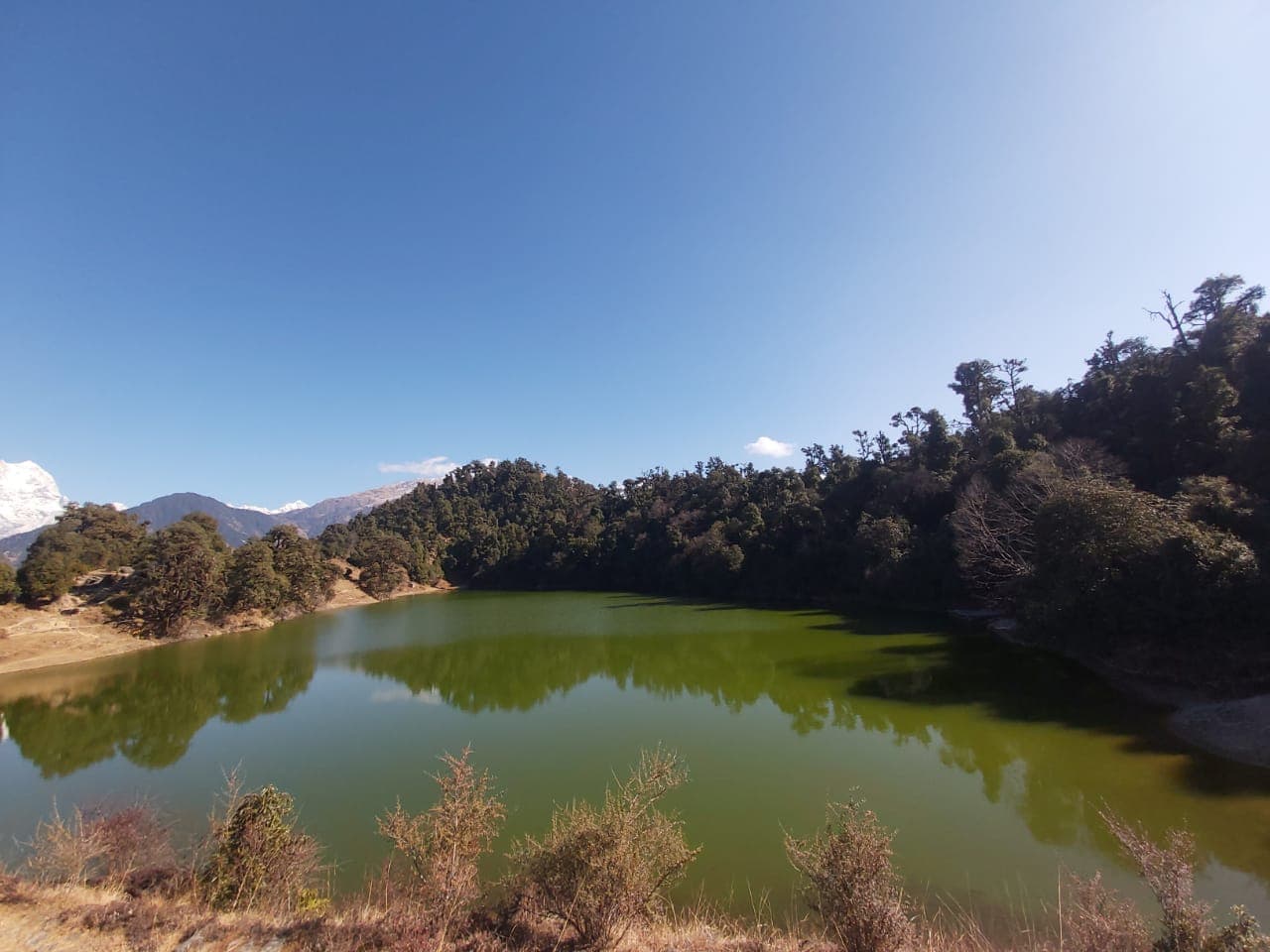
Deoria Tal is a high-altitude lake at approximately 2,438 metres, reached by a 3-kilometre trail that starts right from Sari Village. The trail climbs steadily through a dense mixed forest of oak, rhododendron, and fir. It takes roughly 1.5 to 2 hours uphill at a comfortable pace — manageable for children above 7 years, and genuinely doable for most reasonably fit adults.
When you emerge from the treeline and see the lake for the first time, you will stop walking. The lake sits in a clearing with a 180-degree view of the Chaukhamba massif — four peaks above 6,000 metres that rise dramatically behind the water. On clear mornings the reflection of the peaks in the still surface of the lake is one of the most photographed and still most underrated sights in the Garhwal Himalayas.
Spend at least an hour at the lake. Walk around the edge, sit by the water, eat your packed lunch. Watch the light shift. There is a small forest rest house near the lake if you want basic refreshments.
The descent takes about 1 to 1.5 hours. Back in the village by early afternoon. Rest, hot tea, and a slow evening.
| Trek Distance | 3 km one way from Sari Village |
| Altitude Gain | From ~2,200 m to ~2,438 m |
| Difficulty | Easy to Moderate — suitable for beginners and families |
| Time Required | 1.5–2 hrs up | 1–1.5 hrs down | 1 hr at lake = ~5 hrs total |
| Best Start Time | 7:30–8:00 AM for best light and fewer crowds |
| What to Carry | Water (1.5L minimum), packed lunch, warm layer, trekking shoes, camera |
| Entry Fee | Forest entry fee applicable at the trailhead (approx. ₹150–200 per person) |
| DAY 3 | Chopta — The Meadow That Might Ruin Every Other View For You |
Today you drive to Chopta, approximately 12 kilometres from Sari. The road winds up through forest and emerges into a sweeping landscape of open meadows at around 2,680 metres. Chopta is often called the Switzerland of Uttarakhand — a description that undersells it slightly while also being completely accurate.
The meadows roll out in every direction. The treeline gives way to vast grasslands and, above them, the sharp white teeth of the high Himalayan ridge. On a clear day you can see Kedarnath peak, Chaukhamba, Trishul, and Nanda Devi from the Chandrashila summit. On any day, even a cloudy one, the scale of the landscape is humbling.
Explore the meadows on foot. There are no maintained trails here — just open land and the pleasure of walking in any direction you choose. Find a flat rock, sit down, and watch the clouds move across the peaks. This is genuinely one of the best things you can do in the Indian Himalayas.
On the drive back, stop at the small Garhwali village of Duggalbitta, about 5 kilometres before Sari. Local stalls sometimes sell fresh mountain honey, handmade woolens, and pahadi produce. Worth a slow browse.
| 🌿 Note for Nature Lovers: Chopta and the surrounding Kedarnath Wildlife Sanctuary are home to musk deer, Himalayan monal (the state bird of Uttarakhand), black bear, and leopard. You are unlikely to spot large predators in daylight, but birding here is excellent. Carry binoculars if you have them. |
| DAY 4 | Tungnath & Chandrashila — The Highest Shiva Temple in the World |
This is the day most people come to Chopta for. The Tungnath trek is the main event, and it deserves its reputation completely.
Leave Sari by 6:00 AM and drive to the Chopta trailhead (12 km, about 30 minutes). The trek to Tungnath is 4 kilometres one way, gaining about 1,000 metres in altitude to reach the temple at 3,680 metres. The trail is well-marked, popular, and lined with prayer flags as you approach the temple. It is moderately challenging — not a technical climb, but a sustained uphill that will test your cardio if you are not acclimatised.
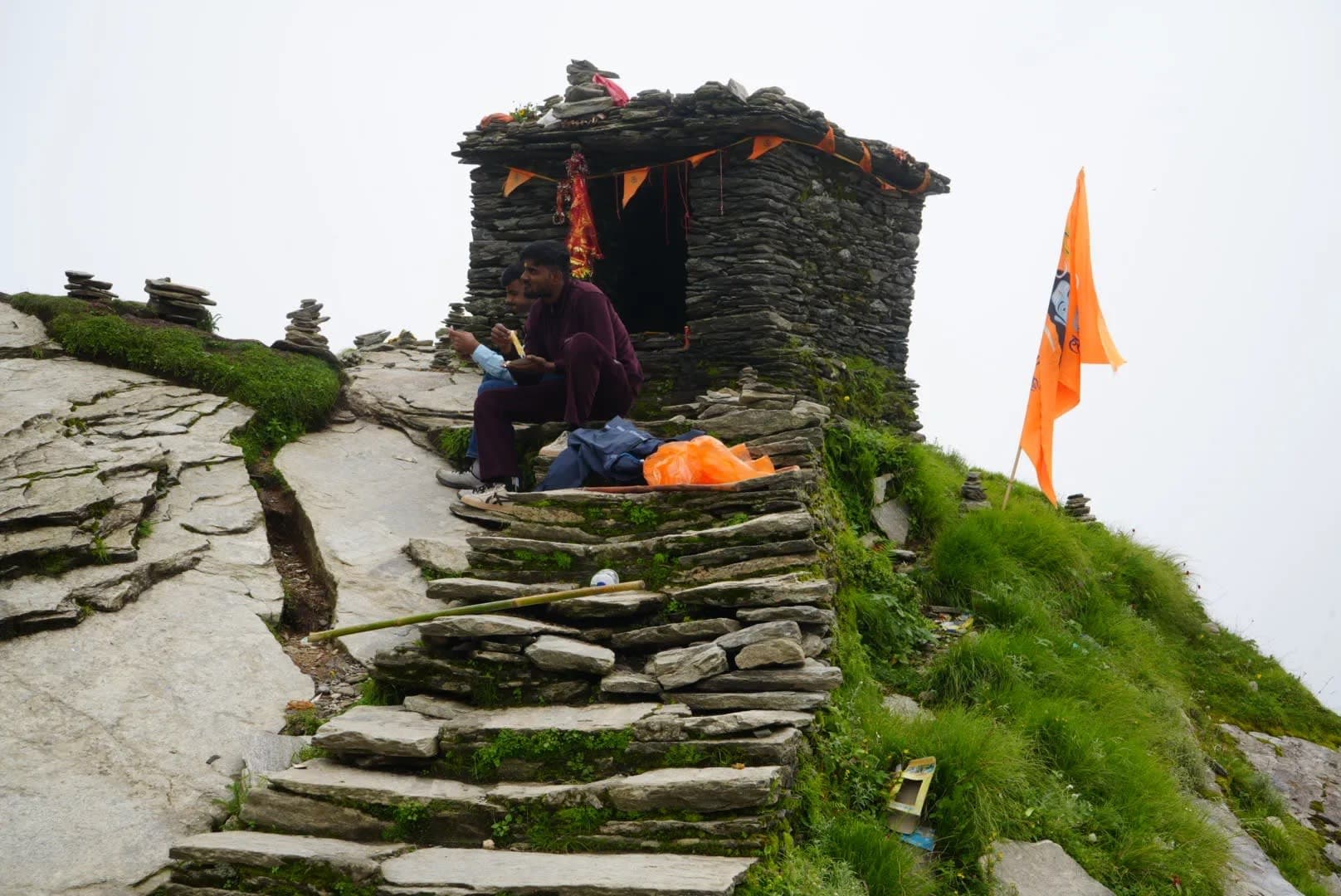
Tungnath temple is one of the Panch Kedar — five sacred Shiva shrines in the Garhwal Himalayas. The stone temple is ancient and atmospheric, set against a backdrop of some of the highest peaks in the range. Offer prayers if you wish, or simply sit on the steps and take in the silence. At 3,680 metres, the air is thin and cold, even in summer. Carry warm layers regardless of the weather when you left Sari.
From Tungnath, adventurous trekkers can continue an additional 1.5 kilometres to the Chandrashila summit at 4,130 metres. The summit offers a full 360-degree panoramic view of the Garhwal Himalayan range — Nanda Devi, Trishul, Kedarnath peak, Chaukhamba, Bandarpunch. It is one of the finest high-altitude viewpoints accessible without technical climbing gear in India. Allow 45 minutes extra each way for this extension.
Descend by early afternoon, drive back to Sari, rest, and eat a large dinner. You have earned it.
| Temple Name | Tungnath — One of the Panch Kedar |
| Altitude | 3,680 m (Temple) | 4,130 m (Chandrashila Summit) |
| Trek Distance | 4 km to Tungnath | 5.5 km to Chandrashila (one way) |
| Difficulty | Moderate — sustained climb, some steep sections near summit |
| Total Trek Time | ~6–8 hrs for full Tungnath + Chandrashila return |
| Temple Season | Open May to November. Closed November to April (winter). |
| Pony Service | Available at the Chopta trailhead for those who need assistance |
| What to Carry | Warm jacket, gloves, water, energy snacks, trekking poles recommended |
| ⚠️ Altitude Advisory: Chandrashila summit is at 4,130 m. If you have had any symptoms of altitude sickness — headache, nausea, dizziness — do not push to the summit. Tungnath at 3,680 m is already a significant altitude gain. Listen to your body. The mountain will be here next time. |
| DAY 5 | Sari Village — The Day You Do Absolutely Nothing, Intentionally |
Rest day. This is not negotiable. After four active days, your legs need a break and your mind needs to stop planning. This is the day Sari Village reveals itself most fully.
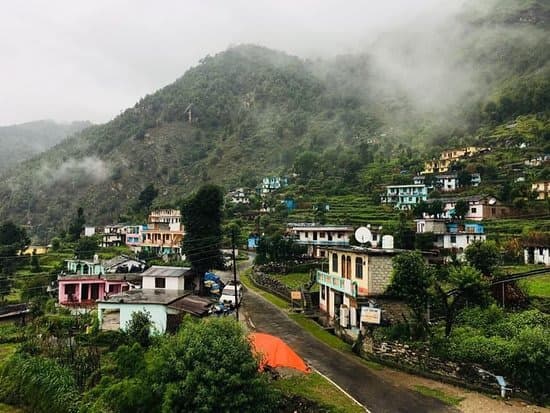
Sleep until 8:00 AM. Have a slow breakfast. Then walk — not trek, just walk — through the village lanes of Sari. The village is home to local Garhwali families who have lived here for generations. Stone houses with wooden balconies, small kitchen gardens, ancient temple shrines, the sound of cattle bells in the morning. If you are respectful and unhurried, villagers are warm and welcoming. A few families sell local produce — mountain honey, dried herbs, hand-ground spices.
Midday: find a sunny spot on a rock or a grassy patch with a mountain view. Bring a book. Stay for two hours. Do not check your phone. This is the real point of coming this far.
In the afternoon, visit the small Kali temple in the village — an ancient stone shrine that has stood here far longer than any hotel or road. Light an incense stick if you wish. Sit in the courtyard and watch the light change on the peaks.
Evening: if your accommodation has an outdoor fire or a terrace with a view, this is the night to use it. Watch the stars come out over the Chaukhamba range. At 2,200 metres with no light pollution, the night sky in Sari Village is spectacular. The Milky Way is visible on clear nights.
| 💬 Honest Observation: Most travellers rush through Sari on the way to Tungnath and miss this entirely. The village itself — its quietness, its people, its extraordinary light in the morning and evening — is the reason to stay longer than a weekend. Give yourself at least one day to do nothing here. You will thank yourself for it. |
| DAY 6 | Ukhimath & Madhmaheshwar Valley — The Lesser-Known Side Trip |
Today is for exploring the wider area around Sari. Most visitors to Chopta never venture into the Madhmaheshwar valley — which means it is quieter, less commercialised, and full of genuine Garhwali character.
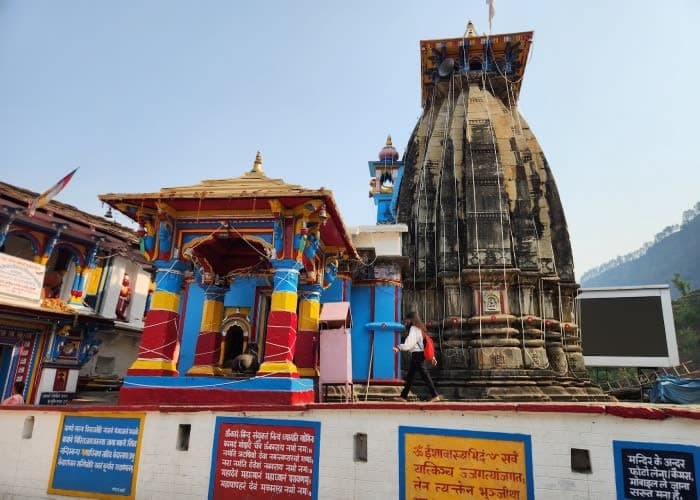
Drive to Ukhimath, about 15 kilometres from Sari (30 minutes). Ukhimath is a significant pilgrimage town and the winter seat of the Kedarnath deity — every winter, when Kedarnath temple closes, the idol is brought here to Ukhimath for the cold months. The town has a calm, devotional energy that is very different from the busier pilgrimage towns of the region.
Visit the Ukhimath temple complex — a cluster of ancient stone temples dedicated to Shiva, Parvati, Usha, and the Pandavas. The architecture is traditional Garhwali temple style, with carved wooden doors and tiered stone roofs. Entry is free. Dress modestly and remove shoes before entering.
After Ukhimath, drive a further 8 kilometres to the trailhead of the Madhmaheshwar trek — one of the Panch Kedar pilgrimage trails. You do not need to trek the full route today; even a 2 to 3 kilometre walk into the valley gives you a sense of the extraordinary landscape — dense forest, the sound of the Madhmaheshwar river, and the first views of the Kedarnath range opening up ahead.
Return to Sari for a final evening. Tonight: pack your bags, eat slowly, and if you are staying at a place with a bonfire or a common sitting area — use it. Tomorrow the road goes back.
| 🗺️ For the Curious: The Madhmaheshwar temple at the end of the full 24-km trail is one of the Panch Kedar and is far less crowded than Kedarnath or Tungnath. For those planning a return trip with a trekking focus, the Madhmaheshwar trek (3–4 days one way) is one of the finest in Uttarakhand and almost unknown outside Garhwali pilgrimage circles. |
| DAY 7 | Sari to Rishikesh — The Long Drive Home |
Check out by 9:00 AM to give yourself a comfortable drive back. The return to Rishikesh is the same road in reverse — Sari to Ukhimath to Augustmuni to Rudraprayag to Srinagar Garhwal to Devprayag to Rishikesh — but it feels different going back. Slower. More familiar. A little melancholy in the way all good trips end.
Stop again at the Rudraprayag confluence if the weather is clear — the evening light on the rivers is very different from the morning light, and worth a second look. If you have time, Srinagar Garhwal has a reasonable main bazaar for last-minute mountain purchases — local honey, woollen socks, pahadi rajma, dried fruits.
Arrive back in Rishikesh by late afternoon or early evening. The noise and light and traffic of even a small city like Rishikesh will feel slightly jarring after a week in the mountains. That feeling of contrast — that faint sense of not quite wanting to return — is how you know the trip was worth it.
| 📌 Return Drive Tips: Avoid leaving Sari after 10:00 AM if possible. The mountain roads get busier midday and the Srinagar-Devprayag section can slow significantly with lorry traffic in the afternoon. Leave early, drive at a relaxed pace, and stop when something is worth stopping for. |
Practical Information — Everything in One Place
What to Pack for Sari Village & Chopta
The altitude range of this trip goes from Rishikesh (375 m) to Chandrashila summit (4,130 m). Pack in layers and assume it will be colder than you expect, especially at night and at altitude.
- Warm base layer, fleece mid-layer, and a wind/waterproof outer shell — even in summer
- Trekking shoes or sturdy walking boots — non-negotiable for Deoria Tal and Tungnath
- Trekking poles — not essential but very helpful on steep descents
- Wool socks — at least 3 pairs
- Gloves and a beanie or warm hat
- Sunscreen SPF 50+ — UV intensity at altitude is significantly higher than the plains
- Headlamp with spare batteries — power cuts are common in remote Himalayan villages
- Water bottle or hydration pack — at least 1.5 litres capacity
- Energy snacks — dry fruits, nuts, energy bars for trek days
- Basic first aid and any personal medications
- Offline maps downloaded before you leave (Maps.me or Google Maps offline for Rudraprayag district)
- Small daypack for treks — separate from your main luggage
- Cash in small denominations — ATMs are rare beyond Ukhimath
.
Where to Eat in and Around Sari Village
Sari Village is a small settlement with limited dining options outside of homestays and resort dining rooms. Here is the honest picture:
- Most accommodation options in Sari Village serve meals as part of their stay — this is the most reliable and practical option. Inform your host of dietary requirements in advance.
- At Chopta trailhead there are a handful of small dhabas and tea stalls that serve hot meals — Maggi, dal, rice, parathas. Basic but good after a trek.
- In Ukhimath there are several small local eateries serving standard Garhwali fare — rajma, rice, seasonal vegetable dishes.
- Srinagar Garhwal (on the drive) has the most options for a proper sit-down meal — useful for the return journey.
- Do not expect restaurants with extensive menus or late-night food anywhere in this region. Plan to eat where you sleep.
.
Mobile Network & Internet in Sari Village
This is one of the most commonly asked questions in every Chopta travel forum.
- BSNL has the most reliable signal in Sari Village and Chopta — if you have a BSNL SIM or can get one before you go, use it.
- Jio and Airtel have partial and intermittent coverage in Sari Village. You may get 2–3 bars indoors with Jio; it fluctuates throughout the day.
- Vi (Vodafone Idea) signal is largely absent beyond Ukhimath.
- On the Tungnath trail and at Chandrashila summit, assume no signal from any network.
- Most accommodations in Sari offer WiFi — quality varies significantly. Download what you need before you arrive.
- Tell your family and contacts you will be unreachable for stretches of time. This is part of the experience.
.
Money & ATMs
- The last reliable ATM on the route from Rishikesh is in Rudraprayag or Ukhimath. Withdraw sufficient cash before proceeding beyond Ukhimath.
- Sari Village has no ATM. Some accommodations accept UPI/GPay but do not rely on this for all payments.
- Most local dhabas, porters, forest entry fees, and small purchases require cash.
- Carry at least ₹3,000–5,000 in cash per person for a week's stay beyond Ukhimath.
How We Can Help — If You Need It
This section is not a sales pitch. It is genuinely just to tell you that if you are finding the planning overwhelming, help exists.
Lake Haven Resort is based in Sari Village — right at the Deoria Tal trailhead. We have been helping travellers navigate this region for years. If you have questions about the road, the trek conditions, the best time to go, whether the Tungnath temple is open on your dates, or what the snow situation looks like on the Chopta trail — you can call or message us and we will give you an honest answer. Not a booking pitch. Just information.
- Trek conditions update: call us before your trip — +91 8077155130
- Road condition info: we monitor Ukhimath–Sari road status regularly
- Tungnath / Deoria Tal opening / closing dates: we track these seasonally
- Local transport help: we can connect you with trusted local drivers from Ukhimath or Rishikesh
- Group or family trip planning: if you are bringing kids or elderly travellers and need advice on difficulty levels and pacing, ask us
And yes — if you do want to stay with us at Lake Haven Resort, we will take good care of you. Clean rooms, honest food, mountain views, and no unnecessary fuss. But that decision is entirely yours. The mountains are for everyone.
One Last Thing Before You Go
Sari Village does not need your Instagram post. It does not need to be discovered. It has been here, quietly, for hundreds of years. The Garhwali families who live here have watched pilgrims, trekkers, seekers, and wanderers pass through for generations.
What it needs — and what you need — is your actual presence. Not a quick overnight to tick off Deoria Tal. Not a rushed Tungnath day trip from Rishikesh. A week. At least a week. Enough time to stop planning, stop photographing, and start actually being somewhere.
The Himalayas are very good at that. They have a way of making everything else feel far away and slightly less important. A week in Sari Village will do that to you. In the best possible way.
Safe travels. The mountains are waiting.
| Lake Haven Resort Sari, Chopta |
Stay in Sari Village and explore at a comfortable pace
Use Lake Haven Resort as a base for Deoria Tal, Chopta, Tungnath and nearby Garhwal experiences without rushing your itinerary.