Omkareshwar Temple Ukhimath The Sacred Winter Seat of Lord Kedarnath – A Complete Pilgrim's Guide
Nestled in the serene Himalayan town of Ukhimath in Uttarakhand's Rudraprayag district,Nestled in the serene Himalayan town of Ukhimath in Uttarakhand's Rudraprayag district.
Omkareshwar Temple Ukhimath
.
Nestled in the serene Himalayan town of Ukhimath in Uttarakhand's Rudraprayag district, the Omkareshwar Temple is one of India's most revered and ancient shrines. Standing at an elevation of 1,317 metres (4,300 feet) above sea level, this magnificent temple is best known as the sacred winter abode of Lord Kedarnath and Lord Madmaheshwar — two of the celebrated Panch Kedar deities. Every year, when winter snows seal the high-altitude Kedarnath and Madmaheshwar temples, the divine idols are ceremonially brought here, making Omkareshwar Temple a year-round pilgrimage destination of extraordinary spiritual significance.
Whether you're a devout pilgrim seeking darshan of Lord Kedarnath outside peak season, a history enthusiast drawn to ancient temple architecture, or a nature lover planning treks to Chopta and Deoria Tal — Omkareshwar Temple Ukhimath is an experience that will remain etched in your heart forever.
.
.
.
Quick Temple Facts at a Glance
| Location | Ukhimath Town, Rudraprayag District, Uttarakhand, India |
| Elevation | 1,317 metres (4,300 feet) above sea level |
| Dedicated To | Lord Shiva (Omkareshwar) + Winter seat of Kedarnath & Madmaheshwar |
| Temple Timings | 6:00 AM – 9:00 PM (open all days) |
| Distance from Rudraprayag | Approx. 41–43 km |
| Distance from Rishikesh | Approx. 175–180 km |
| Nearest Airport | Jolly Grant Airport, Dehradun (~195–200 km) |
| Nearest Railway Station | Rishikesh (~175 km) |
| Best Time to Visit | May–June and September–November |
| Entry Fee | Free |
| Winter Deity Arrival | After Diwali (October/November) |
| Deities Return | Mid-May (Maha Shivaratri muhurta) |
.
.
.
.
History & Origins of Omkareshwar Temple
The exact origins of Omkareshwar Temple are shrouded in the mists of ancient time. According to legends, this sacred site dates back to the Mahabharata era — making it potentially thousands of years old. Historical records, however, largely attribute its construction to the 8th century AD, with some scholars crediting the revered Hindu philosopher and saint Adi Shankaracharya with formalizing worship practices here, while others attribute it to the Katyuri kings who were known patrons of temple construction across the Garhwal Himalayas.
The temple name itself carries deep spiritual meaning. 'Omkareshwar' combines 'Om' — the most sacred syllable in Hinduism, representing the ultimate cosmic reality — and 'Ishwar', meaning Lord Shiva. The name thus translates to 'The Lord Who Manifested as Omkar', a name earned through one of Hinduism's most remarkable legends of devotion.
.
.
The Legend of King Mandhata
The most famous legend associated with Omkareshwar Temple revolves around Emperor Mandhata, a great king of the Solar Dynasty and an ancestor of Lord Rama himself. In the twilight of his reign, Mandhata renounced his kingdom and worldly pleasures and came to this very spot in Ukhimath to perform severe penance for Lord Shiva.
For 12 long years, King Mandhata stood on one leg — a form of extreme tapasya — meditating and praying to Lord Shiva without ceasing. Moved by the king's extraordinary devotion, Lord Shiva appeared before him in the form of the sacred sound 'Omkar' — the primordial vibration of the universe — and blessed him. From that miraculous day onwards, this holy place came to be known as Omkareshwar. A stone statue of King Mandhata still stands within the temple complex today, immortalizing this profound act of devotion.
The Legend of Usha and Aniruddha
Another important legend gives the town its very name. According to the Puranas, Ukhimath was originally called 'Ushamath', named after Usha, the beautiful daughter of the demon king Banasura. According to ancient scriptures, the auspicious wedding of Usha and Aniruddha — the beloved grandson of Lord Krishna — was solemnized at this very spot. The divine union of these two figures made this place eternally sacred, and the idols of Usha, Aniruddha, and other associated deities are still worshipped within the Omkareshwar Temple complex to this day. The name Ushamath gradually evolved over centuries into the present-day Ukhimath.
.
.
Temple Architecture & Sacred Complex
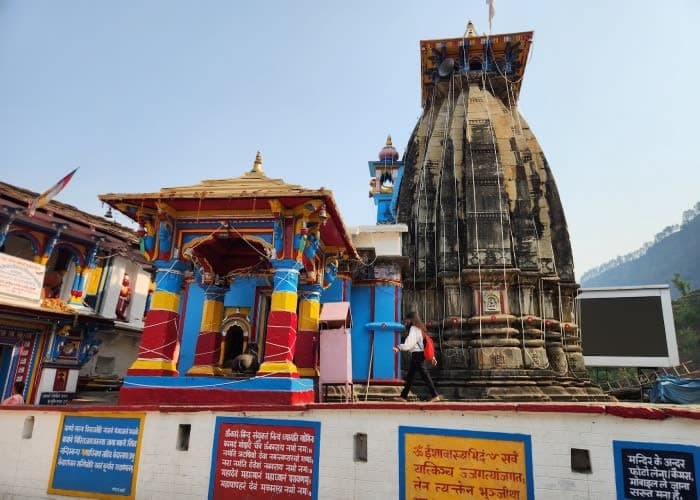
The Omkareshwar Temple is built in the traditional Nagara style of North Indian temple architecture, characterized by a soaring shikhara (spire) that rises majestically against the backdrop of snow-capped Himalayan peaks. The temple features intricate stone carvings and woodwork showcasing the artistic brilliance of the craftsmen of a bygone era — geometric patterns, floral motifs, and scenes from Hindu mythology adorn the temple's exterior walls.
The central sanctum sanctorum (garbhagriha) houses the primary idol of Lord Omkareshwar (Lord Shiva) alongside his consort Goddess Parvati. During the winter months (November to April), the Utsav Doli (processional idols) of Lord Kedarnath and Lord Madmaheshwar are also enshrined here and worshipped with full Vedic rituals.
Smaller Shrines Within the Complex
The broader Omkareshwar Pith encompasses several smaller shrines that together form a spiritually rich complex:
- Maheshwari Temple – Dedicated to Goddess Parvati, the divine mother
- Chandreshwar Temple – Honouring Lord Shiva in his form as Chandreshwar, the lord of the moon
- Shrine of Usha and Aniruddha – Commemorating the sacred Puranic wedding
- Shrine of King Mandhata – With the ancient stone statue of the penance-performing emperor
- Sun God (Surya Dev) Shrine – Paying reverence to the solar deity
.
.
Why Omkareshwar Temple is Uniquely Special
What sets Omkareshwar Temple apart from thousands of other Shiva temples across India is its extraordinary role as the year-round pilgrimage substitute for Kedarnath — one of the 12 Jyotirlingas and among the holiest Shiva shrines in Hinduism.
.
The Sacred Winter Migration
Every year after Diwali (typically in October or November), when the main Kedarnath temple at an altitude of 3,583 metres is set to close for the harsh Himalayan winter, the Utsav Doli (processional idol representing the deity) of Lord Kedarnath is carried in a grand, flower-adorned procession down from Kedarnath to Ukhimath. This deeply moving ceremony is called the 'Doli Yatra' and is accompanied by thousands of devotees, priests chanting Vedic hymns, and traditional music.
For the next six months — from November through April — all daily rituals, aartis, abhisheks, and worship ceremonies for Lord Kedarnath are performed at Omkareshwar Temple. This means that devotees who cannot make the arduous high-altitude journey to Kedarnath, or who wish to visit during the winter months, can receive the blessings of Lord Kedarnath right here at Ukhimath. Similarly, the deity from Madmaheshwar — the Second Kedar — arrives at the temple in December and remains until May.
The Kedarnath idols return to their original abode in a ceremonial procession in mid-May, with the auspicious muhurta (timing) announced on Maha Shivaratri. The head priests of Kedarnath, known as Rawals, are also residents of Ukhimath, further deepening the town's sacred connection to the Kedarnath shrine.
.
.
Major Festivals Celebrated at Omkareshwar Temple
Maha Shivaratri (February/March)
The most significant festival at Omkareshwar Temple, Maha Shivaratri, celebrates the divine marriage of Lord Shiva and Goddess Parvati. On this auspicious night, special pujas, abhisheks, and celebrations are held throughout the night, and it is on this day that the muhurta for reopening of Kedarnath Temple is announced — making it doubly important for pilgrims and the local community.
.
.
Madmaheshwar Mela
A vibrant three-day fair was celebrated upon the arrival of Lord Madmaheshwar's idol at Omkareshwar Temple. The mela is a wonderful blend of spiritual devotion and cultural celebration — school students from across Uttarakhand participate, setting up stalls, giving cultural performances, and filling the temple town with festive energy.
.
.
Bhai Dooj (October/November)
This festival marks the occasion when Lord Kedarnath's idol ceremonially departs Kedarnath temple and begins its journey to the winter seat at Ukhimath. This day sees massive community participation and is one of the most emotionally charged events in the Garhwal Himalayan religious calendar.
.
.
Dussehra
Celebrated with great enthusiasm at Ukhimath, Dussehra marks the victory of good over evil and sees special prayers and community gatherings at the Omkareshwar Temple complex.
Best Time to Visit Omkareshwar Temple Ukhimath
Unlike most high-altitude Uttarakhand temples, Omkareshwar Temple is accessible year-round, making it a flexible destination for pilgrims and travellers alike.
Summer (May to June) – HIGHLY RECOMMENDED
This is the peak pilgrimage and trekking season. The weather is pleasantly cool, the roads are clear, and the surrounding landscape is lush green. This period also coincides with the reopening of Kedarnath and Madmaheshwar temples, making it ideal for combining Omkareshwar darshan with Char Dham yatra.
Autumn (September to November) – BEST SEASON
Post-monsoon September and October offer crystal-clear skies, exceptional visibility of the Himalayan peaks, and the most magical time for photography. The festive season including Navratri, Dussehra, and Diwali adds a spiritual dimension. November also marks the arrival of Lord Kedarnath's idol at Ukhimath — a once-a-year experience not to be missed.
Winter (November to April) – FOR KEDARNATH WINTER DARSHAN
This is when Omkareshwar Temple truly comes into its own as the winter seat of Kedarnath. Temperatures can drop to near-zero at night, but the experience of witnessing the Kedarnath deity in an accessible setting is spiritually unparalleled. Pack warm layers and be prepared for possible road disruptions in January–February.
Monsoon (July to August) – AVOID IF POSSIBLE
The hilly terrain becomes susceptible to landslides and road closures during the monsoon. While the lush greenery is spectacular, travel advisories recommend caution. Dedicated pilgrims do visit, but it requires flexibility and risk tolerance.
.
.
How to Reach Omkareshwar Temple Ukhimath
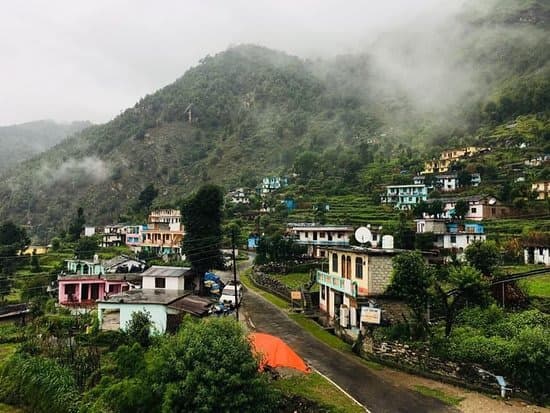
Ukhimath is situated on the main Gopeshwar–Mandal Road. The Omkareshwar Temple is located approximately 2 km from the Ukhimath taxi stand and is one of the most recognizable landmarks in the town.
By Air
The nearest airport is Jolly Grant Airport in Dehradun, approximately 195–200 km from Ukhimath. From the airport, taxis and cabs are readily available for the scenic mountain drive to Ukhimath (approximately 5–6 hours).
By Train
The closest major railway station is Rishikesh, approximately 175 km away. From Rishikesh, regular bus services and taxis are available to Ukhimath via Rudraprayag and Guptkashi.
By Road
This is the most popular and recommended way to reach Ukhimath. From Rishikesh or Haridwar, follow the National Highway through Devprayag → Rudraprayag → Agastyamuni → Kund → Ukhimath. Bus services, shared jeeps, and private taxis are all available along this well-maintained route. From Delhi, the total road distance is approximately 430 km.
.
.
Places to Visit Near Omkareshwar Temple
Ukhimath serves as an excellent base for exploring some of Uttarakhand's most breathtaking destinations:
.
- Chopta – The 'Mini Switzerland of Uttarakhand', a pristine alpine meadow ideal for camping and trekking (30 km from Ukhimath)
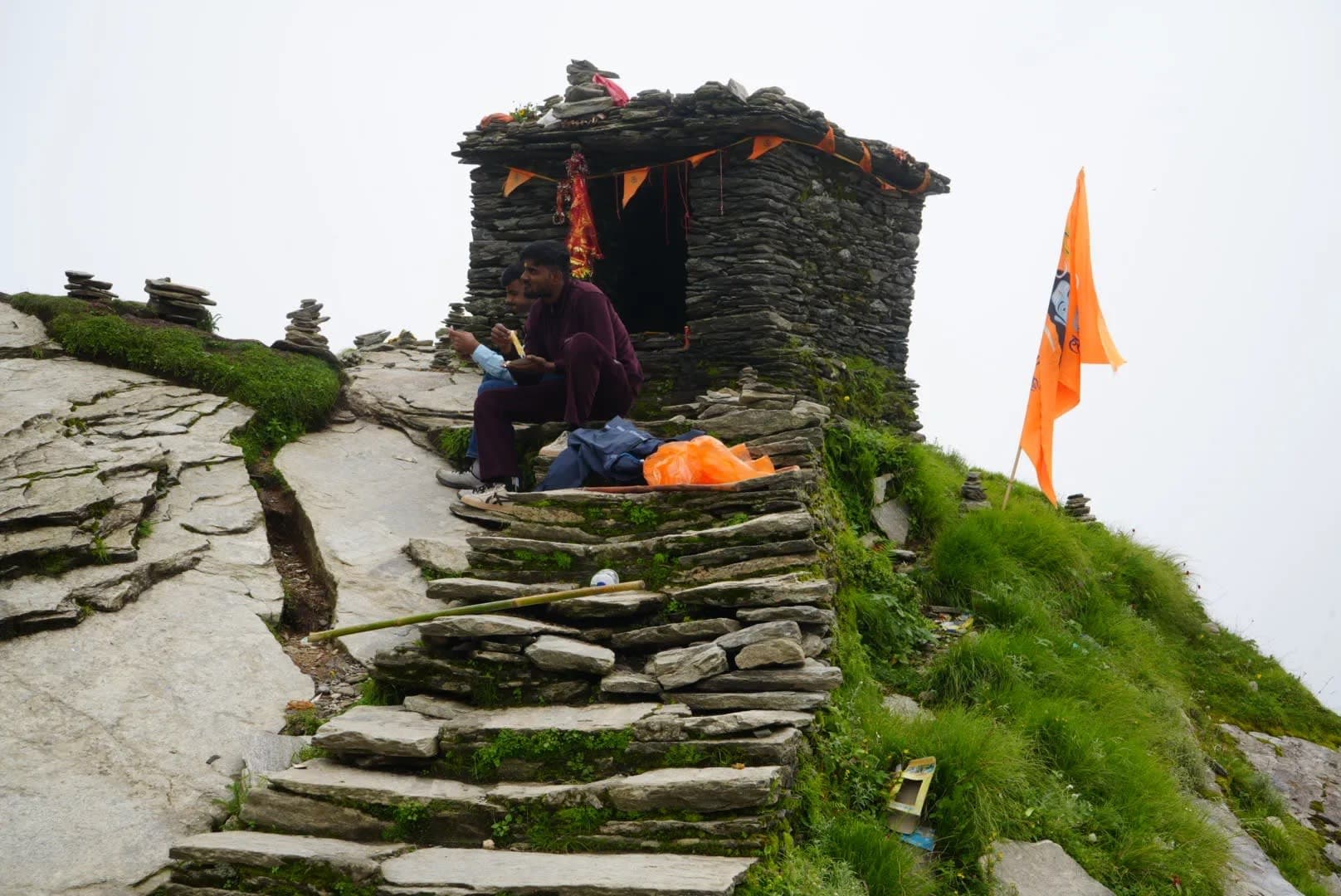
- Tungnath Temple – The world's highest Shiva temple (Third Kedar), reachable via a 3.5 km trek from Chopta
- Chandrashila Summit – A stunning 360-degree Himalayan viewpoint at 4,000 metres, above Tungnath
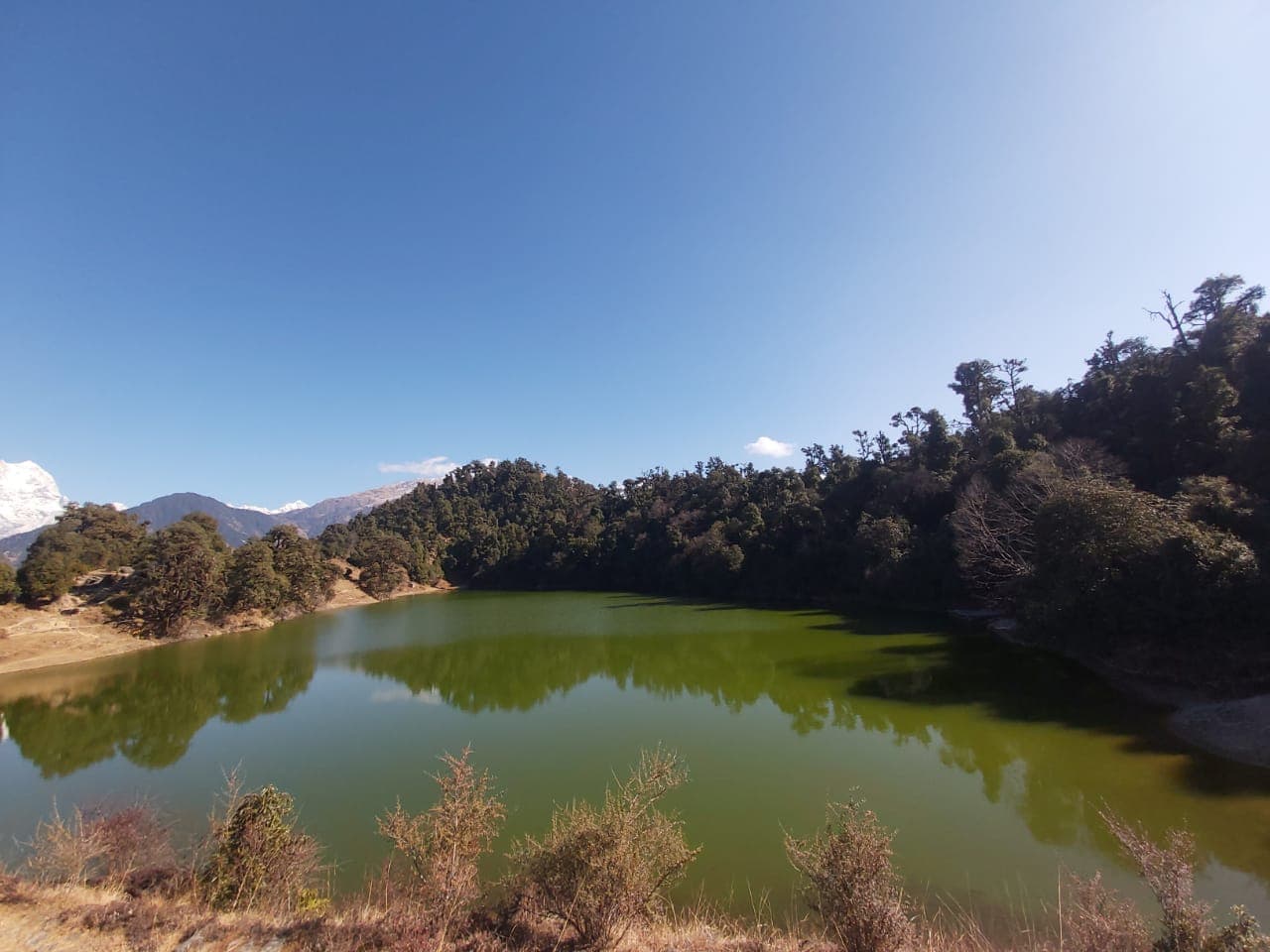
- Deoria Tal – A magical reflective lake at 2,438 metres offering mirror-like reflections of the Chaukhamba peaks
- Madmaheshwar (Second Kedar) – A challenging but rewarding 24 km trek through rhododendron forests
- Guptkashi – An important pilgrimage town 45 km away with the Vishwanath Temple and sacred Manikarnika Kund
- Kashi Karvat Mandir – An ancient 4,000-year-old Naag Devta temple near Sari Village
.
.
Where to Stay Near Omkareshwar Temple
Ukhimath has a modest but growing range of accommodation options catering to pilgrims, trekkers, and tourists:
- GMVN Tourist Rest House – The most popular budget option; government-run with reliable facilities and warm hospitality, located very close to the temple
- Lake Haven Resort Sari, Chopta – A comfortable resort between Ukhimath and Chopta, offering scenic mountain views at budget-friendly prices
.
.
Essential Travel Tips for Omkareshwar Temple Visit
- Temple timings are 6:00 AM to 9:00 PM daily; plan to arrive early morning for a peaceful, crowd-free experience
- Dress modestly and respectfully — cover shoulders and legs when entering the temple premises
- Remove footwear before entering the main sanctum
- Photography may be restricted inside the sanctum — always check with temple authorities
- Carry sufficient cash as ATMs in Ukhimath are limited
- Hire a local guide to gain deeper insight into the temple's history, legends, and ongoing rituals
- If visiting in winter (November–February), pack heavy woolens, thermals, and rain gear
- Confirm road conditions before travelling during monsoon (July–August) due to landslide risk
- Combine your visit with nearby treks to Chopta, Tungnath, or Deoria Tal for a complete Garhwal Himalayan experience
- Respect local customs and the sanctity of the religious environment
.
.
Frequently Asked Questions (FAQs)
Q1. What is Omkareshwar Temple Ukhimath famous for?
Omkareshwar Temple is primarily famous as the sacred winter seat (winter abode) of Lord Kedarnath, one of the 12 Jyotirlingas and among India's holiest Shiva shrines. Every winter after Diwali, the deity of Lord Kedarnath is ceremonially brought here from the snowbound Kedarnath temple and worshipped for six months. The deity of Madmaheshwar (Second Kedar) also resides here in winter.
Q2. When is the best time to visit Omkareshwar Temple Ukhimath?
The best times are May–June (summer pilgrimage season) and September–November (post-monsoon clear skies and festive season). The winter months (November–April) offer the unique opportunity of Kedarnath darshan at an accessible altitude.
Q3. How old is Omkareshwar Temple?
The temple is believed to have origins dating back to the Mahabharata era, making it potentially over 5,000 years old. Historical records suggest formal construction around the 8th century AD by either Adi Shankaracharya or the Katyuri kings.
Q4. Can I visit Omkareshwar Temple in winter?
Yes! Unlike Kedarnath and Madmaheshwar, which close in winter, Omkareshwar Temple remains open year-round. In fact, visiting in winter (November to April) is special as you can take darshan of the Lord Kedarnath deity here when the Kedarnath temple at a high altitude is closed.
Q5. Is Ukhimath accessible by road throughout the year?
Ukhimath is accessible by road for most of the year. The route can occasionally be disrupted by heavy snowfall in January–February or landslides during the monsoon (July–August). It is advisable to check current road conditions before planning your trip.
Q6. What is the entry fee for Omkareshwar Temple?
Entry to Omkareshwar Temple is completely free of charge. However, you may wish to make voluntary donations or purchase offerings (prasad, flowers) from stalls near the temple entrance.
.
.
Conclusion: A Temple Where Devotion Lives Year-Round
Omkareshwar Temple Ukhimath is far more than just a religious site — it is the beating spiritual heart of the Garhwal Himalayas during the long winter months when the high-altitude Char Dham temples fall silent under sheets of snow. Here, devotion never takes a break. Here, Lord Kedarnath is present, accessible, and welcoming to every pilgrim regardless of season.
Surrounded by the majestic snow-capped Himalayas, steeped in legends that span thousands of years, and alive with the chants of Vedic hymns morning and evening, Omkareshwar Temple Ukhimath is a destination that touches your soul. Whether you seek spiritual solace, historical wonder, architectural beauty, or the thrill of Himalayan adventure — Ukhimath and its crown jewel, the Omkareshwar Temple, will never disappoint.
Plan your visit, receive the blessings of Lord Omkareshwar and Lord Kedarnath, and carry home memories that will last a lifetime. Har Har Mahadev! 🙏
Stay in Sari Village and explore at a comfortable pace
Use Lake Haven Resort as a base for Deoria Tal, Chopta, Tungnath and nearby Garhwal experiences without rushing your itinerary.